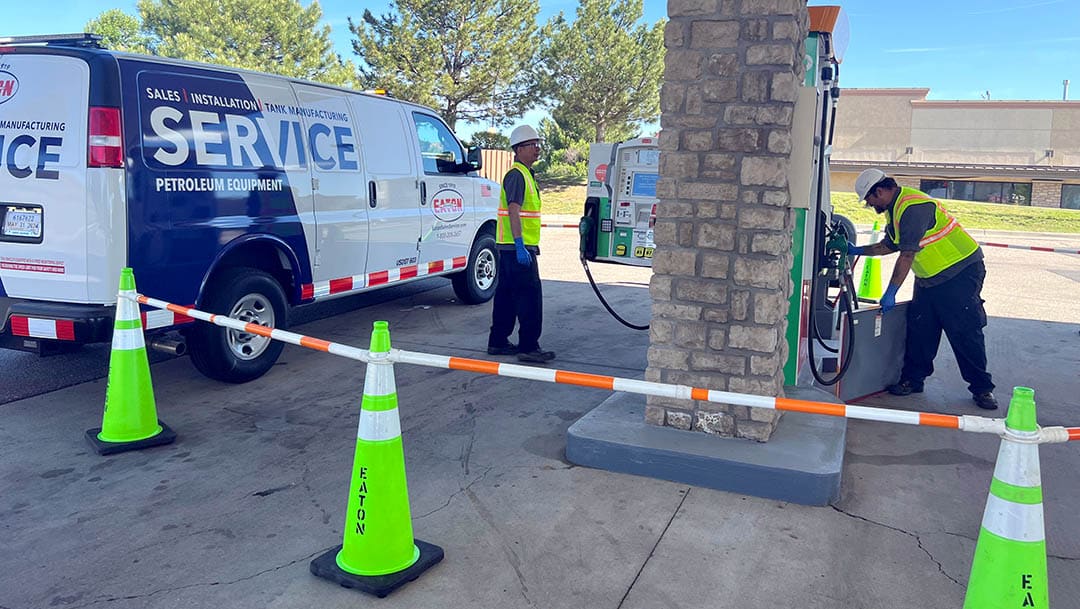
As temperatures rise and summer is in full swing, fueling stations—both retail and commercial—face seasonal challenges that can affect performance, compliance, and overall safety. Whether you’re operating a busy truck stop, a fleet fueling station, or a retail forecourt, summer is the time to stay proactive.
Here are several expert-recommended maintenance tips to help keep your fueling equipment running safely and efficiently through the hottest months of the year.
1. Inspect and Clean Sumps and Spill Buckets
Excess moisture from summer rains or irrigation can collect in underground sumps and spill buckets. This can corrode parts, trigger false alarms, or lead to real leaks.
Tip: Schedule sump inspections now to prevent long-term damage and ensure you’re EPA-compliant. Don’t forget overfill devices and containment systems.
2. Check for Thermal Expansion in Above Ground Storage Tanks (ASTs)
Hot weather causes fuel to expand, especially in ASTs. This can result in over-pressurization, vapor loss, or potential safety hazards.
Tip: Ensure pressure-relief valves and venting systems are working properly. For commercial fueling stations, verify tank monitoring and alarm settings to avoid overfills.
3. Clean Forecourt Surfaces and Dispenser Exteriors
Dirt, grease, and fuel residue can build up faster in the summer. Aside from aesthetics, this can present slip hazards and interfere with routine inspections.
Tip: A mid-year deep clean helps maintain a safe customer environment—and gives your technicians clear access to perform compliance checks underneath.
4. Calibrate Fuel Dispensers and Meters
Fuel expands in warmer temperatures, which can slightly affect volume measurement. Regular calibration ensures customers are getting the correct amount—and you’re not losing profit.
Tip: Summer is a perfect time for meter calibrations, especially for commercial truck fueling operations and cardlock sites with high throughput.
5. Test for Phase Separation in Ethanol-Blended Fuels
High temps and water intrusion (from humidity or rainfall) increase the risk of phase separation in tanks with ethanol-blended fuels.
Tip: Use tank stick tests or install monitoring systems that detect phase separation. If you don’t already have water detection alarms, now is the time to upgrade.
6. Inspect Nozzles, Hoses, and Breakaways
These components see extra wear in high-traffic summer months. Leaks or broken breakaways can cause downtime, spills, and lost revenue.
Tip: Do a walk-through inspection weekly. For high-volume retail stations, consider replacing worn nozzles or hoses before they fail.
7. Review Your Preventative Maintenance Schedule
If your last PM visit was in the spring or earlier, summer is your next logical checkpoint. Preventative maintenance now reduces the risk of breakdowns heading into fall—and avoids the seasonal repair backlog.
Tip: Ask us about a customized PM program to keep you on track year-round.
Don’t Let Summer Heat Slow You Down
From tank integrity to dispenser performance, the right maintenance now will save time, money, and headaches later. Eaton Sales & Service offers seasonal service programs, on-site inspections, and EPA compliance support to help you stay ahead of summer’s challenges.
Ready to schedule a mid-year checkup?
Contact us today or reach out to your local Eaton representative to book a summer service visit.